

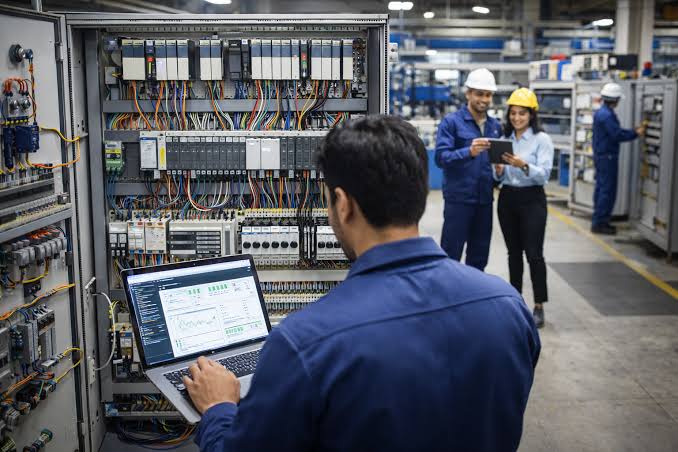
Programmable Logic Controllers form the backbone of modern industrial automation, yet many engineers and technicians struggle to bridge the gap between theoretical knowledge and practical application. Mastering industrial control architecture requires more than reading manuals or watching demonstrations. Real competency develops through structured, hands-on experience with actual hardware and software systems.
Quality PLC Training programs immerse participants in realistic industrial scenarios where mistakes become learning opportunities and successes build confidence. Whether you’re transitioning from electrical work to automation or updating skills for Industry 4.0, understanding what comprehensive training entails helps you choose the right program and prepare effectively.
Core Components of Professional PLC Training Programs
Professional PLC training extends far beyond basic programming concepts. Participants work with actual industrial hardware, including processors, I/O modules, human-machine interfaces (HMIs), and communication networks. Training facilities typically feature multiple workstations equipped with various PLC brands and models, allowing students to experience different programming environments and hardware configurations.
The curriculum balances theoretical foundations with practical exercises. Instructors demonstrate concepts using real equipment, then guide participants through increasingly complex scenarios. This approach ensures students understand not just the “how” but also the “why” behind control system design decisions.
Most programs allocate 60-70% of time to practical work. Participants wire physical components, configure hardware, write programs, and troubleshoot faults. This ratio reflects industry reality—automation professionals spend most of their time implementing solutions rather than discussing theory.
Essential Hardware Components
Training stations mirror actual industrial installations. Each workstation typically includes a PLC rack with power supply, CPU, digital and analog I/O modules, and communication cards. Additional components like variable frequency drives (VFDs), servo systems, and industrial sensors provide realistic control scenarios.
Participants learn proper handling procedures, installation techniques, and safety protocols. They practice mounting components, running cables, and creating neat, documented installations that meet industrial standards.
Programming Fundamentals and Advanced Techniques
Ladder logic remains the foundation of PLC programming, but modern training covers multiple programming languages defined by IEC 61131-3 standards. Students begin with basic instructions—contacts, coils, timers, and counters—before progressing to advanced functions like PID loops, data manipulation, and recipe management.
Effective programs teach programming as problem-solving rather than memorization. Instructors present industrial scenarios—conveyor systems, tank level controls, packaging machines—and guide students through developing solutions. This approach develops critical thinking skills essential for real-world applications.
Structured Text and Function Block Programming
Beyond ladder logic, participants learn Structured Text for complex calculations and Function Block Diagrams for process control applications. Modern PLCs support multiple languages within single projects, and training emphasizes selecting appropriate languages for specific tasks.
Students practice converting between programming styles, understanding when each language offers advantages. They learn to create reusable code libraries, implement proper documentation standards, and develop programs that other technicians can understand and modify.
Network Communication and System Integration
Modern industrial control systems rarely operate in isolation. Training programs dedicate significant time to network configuration and communication protocols. Participants configure Ethernet/IP, Modbus, Profibus, and other industrial networks, learning to establish reliable data exchange between PLCs, HMIs, drives, and enterprise systems.
Allen-Bradley PLC Training programs particularly emphasize Rockwell’s integrated architecture, teaching participants how ControlLogix, CompactLogix, and MicroLogix platforms communicate within larger automation systems. Students configure producer-consumer models, set up messaging instructions, and implement redundant network architectures for critical applications.
Cybersecurity receives increasing attention as industrial systems connect to corporate networks and cloud services. Participants learn about network segmentation, firewall configuration, and implementing security policies that protect control systems without hindering operations.
Troubleshooting Methodologies and Diagnostic Tools
Experienced instructors know that troubleshooting skills separate competent technicians from exceptional ones. Training programs simulate common faults—loose connections, failed components, communication issues—teaching systematic approaches to problem identification and resolution.
Participants learn to use diagnostic LEDs, error codes, and software tools to identify issues quickly. They practice using multimeters, oscilloscopes, and network analyzers to verify signals and communication. More importantly, they develop logical troubleshooting processes applicable across different systems and manufacturers.
Documentation and Maintenance Procedures
Professional training emphasizes proper documentation throughout the learning process. Students create electrical drawings, develop maintenance schedules, and document program modifications. They learn to write clear descriptions for rungs and instructions, making programs self-documenting for future maintenance.
Participants practice creating backup strategies, implementing version control, and establishing change management procedures. These skills prove invaluable when maintaining systems where downtime costs thousands of dollars per minute.
Preparing for Certification and Career Advancement
Many training programs align with industry certifications. Participants prepare for exams like ISA’s Certified Control Systems Technician (CCST) or manufacturer-specific certifications. These credentials validate skills and often lead to salary increases and advancement opportunities.
Quality programs provide practice exams, study materials, and guidance on certification paths. Instructors share insights about exam structure and common pitfalls, increasing first-attempt pass rates. Some facilities serve as authorized testing centers, allowing participants to complete certification immediately after training.
Beyond certifications, training programs often include career development components. Participants learn about industry trends, emerging technologies, and skill sets that employers value. Networking opportunities with instructors and fellow participants create connections that benefit long-term career growth.
Frequently Asked Questions
How long does comprehensive PLC training typically take?
Basic PLC training programs run 3-5 days, covering fundamental programming and troubleshooting. Advanced courses extend 1-2 weeks, incorporating complex programming, networking, and system integration. Many professionals complete multiple courses over several months, building expertise progressively while applying skills between sessions.
Do I need electrical experience before starting PLC training?
Basic electrical knowledge helps but isn’t mandatory for introductory courses. Understanding voltage, current, and basic circuit theory accelerates learning. Many programs include electrical fundamentals reviews during the first day. Participants with electrical backgrounds typically grasp I/O wiring and troubleshooting concepts faster.
Which PLC brands should I learn first?
Start with the brand most common in your industry or region. Allen-Bradley dominates North American markets, while Siemens leads in Europe. Learning one platform thoroughly makes transitioning to others easier since core concepts remain consistent. Focus on understanding control logic principles rather than memorizing specific software commands.
Can online PLC training replace hands-on programs?
Online training provides valuable theoretical knowledge and software familiarity, but cannot fully replace hands-on experience. Physical wiring, hardware troubleshooting, and real equipment interaction require in-person practice. Hybrid approaches work well—online theory followed by intensive hands-on sessions maximizes both learning efficiency and practical skills development.
What equipment should I practice with after training?
Start with training kits containing small PLCs, basic I/O simulators, and programming software. Many manufacturers offer educational packages at reduced prices. Build simple projects—traffic light controllers, garage door openers—to reinforce concepts. Join online communities where members share project ideas and troubleshooting advice.
How often should I update my PLC skills?
Technology evolves continuously, making annual skill updates valuable. Attend manufacturer seminars, complete online modules for new software versions, and explore emerging technologies like IIoT integration. Staying current with industry trends ensures your skills remain relevant and marketable.
Conclusion
Mastering industrial control architecture through hands-on PLC training provides the practical skills modern automation demands. Quality programs combine hardware experience, programming proficiency, networking knowledge, and troubleshooting expertise into comprehensive learning experiences. The investment in professional training pays dividends through increased competency, career advancement, and the ability to tackle increasingly sophisticated automation projects.
Success in industrial automation requires continuous learning and practical application. The foundation built through structured hands-on training creates a platform for ongoing professional growth. As manufacturing embraces smart factory concepts and integrated control systems, professionals with solid PLC skills and the ability to adapt to new technologies will drive industrial innovation forward.